The environment is central to the lives and livelihoods of indigenous communities — yet it faces deforestation, pollution and climate change. Protecting nature is no longer optional. It is survival.
Restoring balance between people and the planet.
The environment is central to the lives and livelihoods of indigenous communities — yet it faces deforestation, pollution and climate change. Protecting nature is no longer optional. It is survival.
Every initiative is designed with the community, not for it — because the people who have lived with these forests for generations already know how to protect them. Our role is to give that knowledge tools, funding and a wider audience.
Focus Area
Three ways we take climate action
Reforestation
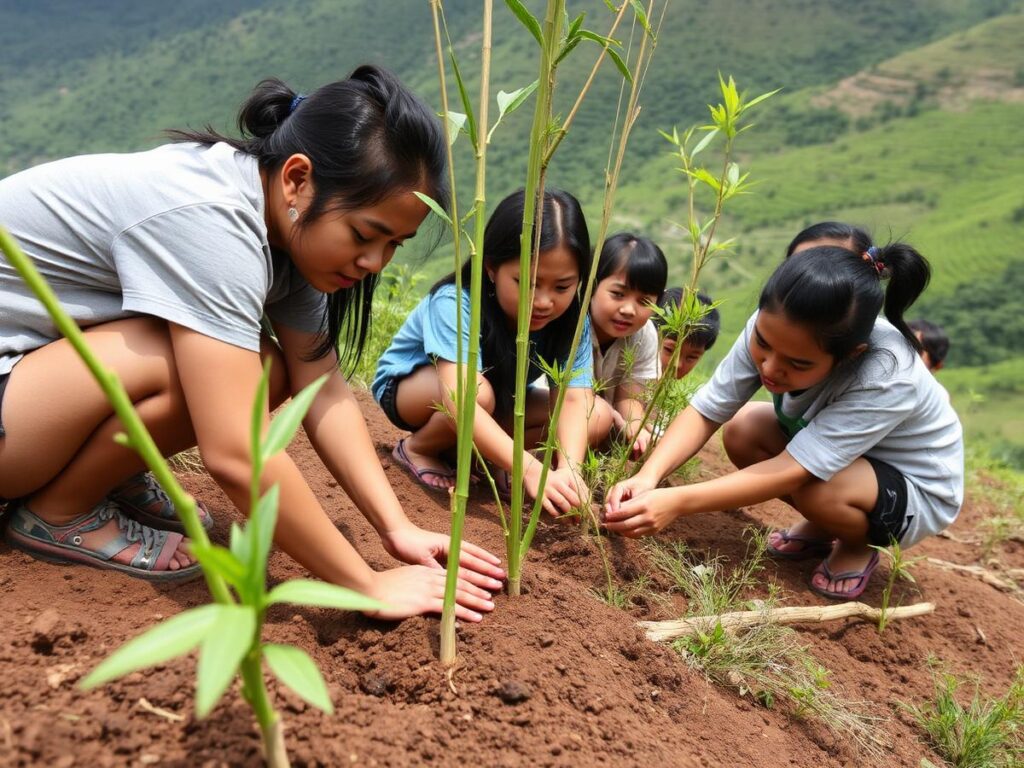
Bamboo Forest Project
Planting bamboo — an indigenous, fast-growing and sustainable resource that prevents soil erosion, stores carbon and supports local livelihoods.
01
Learning
Terrarium Initiative
Youths build miniature ecosystems by hand, learning biodiversity, balance and why protecting nature begins with understanding it.
02
Campaign
Barefoot Forest Campaign
Walking the hills barefoot to reconnect people with the land, and promoting eco-friendly practices like organic fertilizer from kitchen waste.
03
The urgency
The challenges are not distant. They are already here.
Without collective action, the most vulnerable communities — especially in the hills — will continue to carry the consequences.
Deforestation
Hillsides cleared faster than they can regrow, taking soil, water and habitat with them.
Climate disasters
Landslides and erratic rainfall hit hill communities first and hardest.
Rising waste
Plastic and unmanaged waste pollute streams that villages still drink from.
Loss of biodiversity
Native species disappear as unsustainable practices replace traditional stewardship.
Take climate action
Plant with us, learn with us, protect with us.
Fund a bamboo plot, join a terrarium workshop, or walk with the Barefoot Forest Campaign.