Objective
To promote sustainable waste management and climate-smart agriculture in Bandarban by transforming household organic waste into natural fertilizer, reducing dependence on chemical fertilizers, improving environmental health, and encouraging community-led circular economy practices.
Project Summary
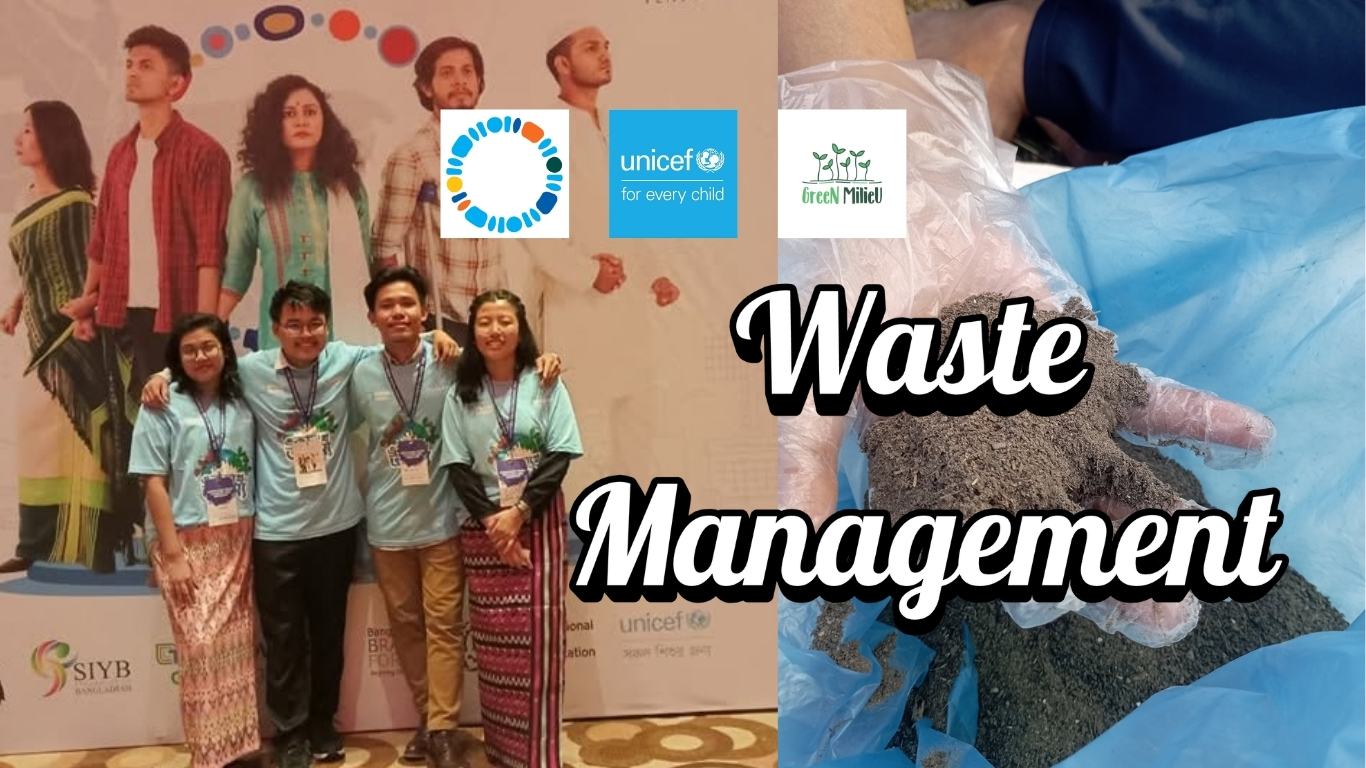
The Community Waste Management and Organic Fertilizer Initiative, implemented by Green Milieu, was developed after winning the Bangladesh Youth Challenge 2022, organized by Generation Unlimited and UNICEF Bangladesh. The project was created to address two interconnected challenges faced by communities in Bandarban: the growing accumulation of household organic waste and the increasing dependence of Indigenous farmers on chemical fertilizers, which can negatively affect soil health, biodiversity, and long-term agricultural sustainability.
At the heart of the initiative is the belief that waste should be viewed as a valuable resource rather than a burden. By introducing simple and locally appropriate waste management practices, the project empowered community members to convert everyday kitchen waste into nutrient-rich organic fertilizer through composting. This approach not only reduced the amount of waste entering the environment but also created a sustainable alternative for improving agricultural productivity.
The project worked closely with Indigenous households, farmers, and community members to establish practical waste segregation and composting systems at the community level. Participants received hands-on training on separating biodegradable waste, producing organic compost, and applying it to agricultural land. These activities demonstrated how locally available resources could be transformed into environmentally friendly solutions that support both livelihoods and ecosystem health.
Beyond waste management, the initiative promoted sustainable farming practices by encouraging Indigenous farmers to replace or reduce the use of chemical fertilizers with organic compost produced within their own communities. This contributed to healthier soils, improved crop production, reduced farming costs, and strengthened the resilience of traditional agricultural systems while supporting biodiversity conservation.
Capacity building formed a central component of the project. Community awareness sessions, practical demonstrations, and youth engagement activities equipped participants with knowledge and skills on waste management, compost production, environmental stewardship, and climate action. By actively involving young people in leading community initiatives, the project fostered local leadership and inspired greater community ownership of environmental solutions.
The project also demonstrated the potential of circular economy practices in rural communities, where household waste can be transformed into valuable agricultural inputs rather than becoming an environmental burden. Through collaboration with local communities and Indigenous farmers, the initiative showcased a practical, low-cost, and replicable model for sustainable waste management in the Chittagong Hill Tracts.
Ultimately, the Community Waste Management and Organic Fertilizer Initiative contributed to cleaner communities, healthier agricultural landscapes, and greater environmental awareness in Bandarban. By converting kitchen waste into organic fertilizer and promoting sustainable farming practices, the project empowered communities to take collective action toward climate resilience, environmental conservation, and a more sustainable future.