
Objectives:
To preserve Indigenous cultural heritage, strengthen intergenerational knowledge exchange, and empower Indigenous youth to lead community-driven cultural and environmental initiatives through traditional knowledge sharing, bamboo plantation, digital rights training, and creative cultural expression in Bandarban, Chittagong Hill Tracts.
Project Summary
The Roots to Wings: Heritage Guiding Youth Voices Project, implemented by Green Milieu in partnership with WOW Bangladesh and the British Council, is a community-led initiative that brings Indigenous youth, Elders, traditional knowledge holders, and community members together to preserve living heritage, strengthen relationships with nature, and promote Indigenous cultural identity in Bandarban.
The project recognises the importance of traditional knowledge, cultural practices, and intergenerational connections in sustaining Indigenous identity and community resilience. Through community gatherings, environmental activities, digital capacity building, and cultural exhibitions, the initiative creates opportunities for young people to learn from their communities, document their heritage, and carry traditional knowledge forward.
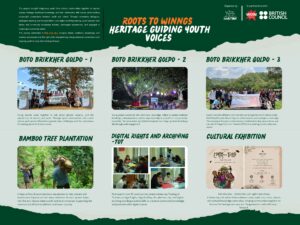
Boto Brikkher Golpo 1: Gender Equality and Youth Voices
This gathering brought young people together to discuss gender equality and the experiences of women and youth in their communities. Through open conversations and shared stories, participants explored gender roles, social challenges, and the importance of creating inclusive spaces where diverse voices can be heard. The activity encouraged young people to reflect on equality, participation, and their role in building more inclusive communities.
Boto Brikkher Golpo 2: Intergenerational Knowledge Exchange
This gathering connected Indigenous youth with Elders and community knowledge holders to explore traditional knowledge, cultural practices, and the ways knowledge is passed from one generation to another. Through conversations and shared experiences, participants reflected on the importance of keeping Indigenous knowledge alive and strengthening relationships between younger and older generations.
Boto Brikkher Golpo 3: Traditional Ecological Knowledge and Community Conservation
Young people from nine Indigenous communities gathered at Chakma Circle Chief Raja Devashay Roy’s residence to explore environmental and ecological knowledge. The discussion focused on biodiversity, traditional ecological practices, and the role of Village Common Forests (VCFs) in sustaining communities and nature. The gathering highlighted the importance of community knowledge and collective action in protecting local ecosystems.
Bamboo Tree Plantation: Growing Roots for a Sustainable Future
In Kaprue Para, Buthum bamboo was planted to help prevent soil erosion and improve soil and water retention. Bamboo’s root system helps stabilise the soil, reduce water runoff, and retain moisture, supporting local efforts to address water scarcity. The activity connected youth participation with practical environmental action and demonstrated how community-led initiatives can contribute to ecosystem restoration and local resilience.
Digital Rights and Archiving: Training of Trainers (ToT)
Participants from ten Indigenous communities joined a three-day Training of Trainers programme on digital rights, digital safety, cybersecurity, and digital archiving. The training strengthened participants’ practical skills in protecting digital information, documenting community knowledge, and promoting safer digital spaces. It also highlighted the importance of responsible digital archiving in preserving Indigenous cultural heritage and making community knowledge accessible for future generations.
Cultural Exhibition: Poh Chu Gro, Before the Last Light Fades Away
The project culminated in Poh Chu Gro: Before the Last Light Fades Away, a three-day cultural exhibition celebrating the living heritage of Indigenous communities in Bandarban. Through stories, traditions, music, dance, weaving, and other cultural expressions, the exhibition brought communities together to share their heritage with wider audiences. It created a space for Indigenous artists, cultural practitioners, and young people to celebrate their identities and reflect on the importance of passing their cultural knowledge to future generations.
Through these interconnected activities, Roots to Wings strengthened opportunities for Indigenous youth to engage with Elders, explore traditional knowledge, participate in environmental conservation, build digital skills, and celebrate their cultural identities. The project brought cultural preservation and community action together, demonstrating how heritage can guide young people towards a more inclusive and sustainable future.
Ultimately, Roots to Wings seeks to ensure that Indigenous knowledge, cultural practices, and community relationships remain vibrant across generations. By placing youth and community knowledge holders at the centre of its approach, the project contributes to the preservation of living heritage and strengthens Indigenous communities’ ability to shape their own futures.