
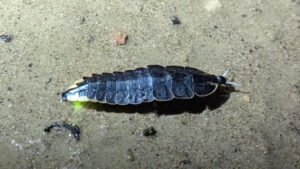
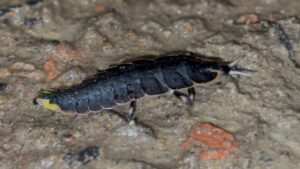
On a damp evening in the forests of the Chittagong Hill Tracts, if you look carefully beneath fallen leaves or along the moist forest floor, you may discover a creature that looks as though it belongs in a science-fiction movie. Flattened, armored, and carrying a faint green glow at the tip of its body, it hardly resembles the graceful fireflies that illuminate summer nights.
Yet this extraordinary little creature is a firefly larva—the longest-lived and perhaps the most important stage in a firefly’s life.
While most people admire the brief flashes of adult fireflies, very few realize that the real story begins long before those lights appear. Hidden beneath the soil, among leaf litter and decaying wood, firefly larvae quietly protect ecosystems while living one of nature’s most fascinating lives.
A Life Built in DarknessA firefly’s life cycle is far longer and more remarkable than most people imagine.
It begins when a female lays her eggs in moist soil, moss, or beneath fallen leaves. Surprisingly, even these tiny eggs emit a faint glow.
After several weeks, the eggs hatch into larvae, often called glowworms. Unlike the delicate adults, the larvae are heavily armored predators equipped with strong jaws. They spend most of their lives hidden beneath leaves, inside rotten logs, or under tree bark, where they feed on snails, slugs, earthworms,
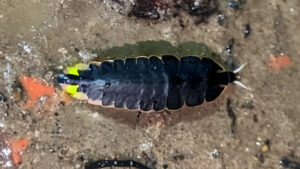
and other soft-bodied invertebrates. Depending on the species, this larval stage may last from one to even two years.
Once fully grown, the larva transforms into a pupa inside a protective chamber. During this resting stage, its body undergoes an extraordinary transformation before emerging as the familiar winged adult.
Ironically, the adult stage—the one most people recognize—lasts only a few weeks. During this brief period, the adults focus primarily on finding mates and reproducing before their life comes to an end.
The Science Behind the Glow
Fireflies produce light through one of nature’s most efficient chemical reactions, known as bioluminescence.
Inside specialized light-producing cells called photocytes, a molecule called luciferin reacts with oxygen in the presence of an enzyme called luciferase. The reaction also requires cellular energy in the form of ATP and magnesium ions.
Unlike ordinary light bulbs that waste much of their energy as heat, nearly all of the energy in this reaction is converted directly into visible light. Because so little heat is produced, firefly light is known as “cold light.”
This remarkable efficiency has fascinated scientists for decades and has made firefly luciferase one of the most valuable tools in modern biological research.
Why Do Firefly Larvae Glow?
Adult fireflies flash their lights mainly to attract mates, but larvae glow for entirely different reasons.
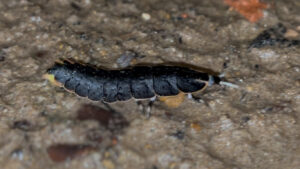
Their steady glow serves primarily as a warning signal to predators. Many firefly larvae contain defensive chemicals known as lucibufagins, which make them distasteful or toxic to predators such as frogs, birds, spiders, and small mammals. Their glowing bodies advertise this chemical defense, reducing the likelihood of being attacked.
Unlike adults, whose flashing patterns vary by species, larvae usually produce a continuous glow throughout the night. In some species, they can slightly increase or decrease the brightness, but they rarely produce the complex flashing displays seen in adults.
Nature’s Silent Pest Controllers
Although rarely seen, firefly larvae perform an important ecological service.
As active predators of snails and slugs, they naturally help control populations of animals that can damage crops and gardens. By keeping these populations in balance, firefly larvae contribute to healthier ecosystems without the need for chemical pesticides.
Their presence reflects the complex interactions that keep forest ecosystems functioning properly.
Nature’s Ultimate Health Inspector
Fireflies are far more than beautiful insects. They are considered bioindicators—species whose presence reflects the health of an environment.
Healthy firefly populations usually indicate clean air, moist soils, intact vegetation, and relatively low levels of pollution. Because they are highly sensitive to environmental changes, they are often among the first organisms to disappear when ecosystems begin to degrade.
In many ways, fireflies serve as nature’s health inspectors, silently revealing the condition of the landscapes they inhabit.
Why Are Fireflies Disappearing?
Across the world, firefly populations are declining, and scientists have identified several major threats.
Light Pollution
Artificial lighting from streets, buildings, vehicles, and homes interferes with the flashing signals adults use to locate mates. When these signals become difficult to detect, mating success declines and fewer eggs are produced.
Habitat Loss
Fireflies depend on moist forests, wetlands, grasslands, stream banks, and leaf litter throughout their life cycle. As these habitats are cleared for roads, agriculture, and urban development, the insects lose the environments essential for survival.
Pesticides
Agricultural chemicals can directly kill firefly eggs, larvae, and adults. They also reduce populations of snails and slugs—the primary food source for many larvae—making survival even more difficult.
Water Pollution
Many species develop near streams, ponds, wetlands, and rice fields. Pollution from agricultural runoff and industrial waste can reduce larval survival and damage aquatic habitats.
Climate Change
Changing rainfall patterns, rising temperatures, prolonged droughts, and extreme weather events alter the moist habitats that fireflies require throughout their development.
Human Disturbance
In popular firefly-viewing locations, excessive tourism, trampling of vegetation, and the widespread use of flashlights can disrupt breeding behavior and damage fragile habitats.
Why Should We Care?
fireflies would mean far more than losing one of nature’s most magical spectacles.
Fireflies contribute to biodiversity, help regulate populations of small invertebrates, and provide food for other wildlife. Their presence signals healthy ecosystems, making them valuable indicators for conservation efforts.
Their importance extends beyond ecology. The enzyme luciferase, responsible for their bioluminescence, has become an essential tool in biomedical research. Scientists use it in gene expression studies, drug discovery, disease detection, and many areas of molecular biology. Luciferase-based techniques have also contributed to cancer research by helping researchers track cancer cells and evaluate potential treatments in laboratory studies.
Before the Last Light Fades Away
Perhaps the greatest tragedy is that many children today are growing up without experiencing skies and forests filled with dancing fireflies. What was once a common sight has become increasingly rare.
Their disappearance is not inevitable. By protecting forests and wetlands, reducing unnecessary artificial lighting, limiting pesticide use, conserving leaf litter, and promoting environmentally responsible land management, we can help restore habitats where fireflies can thrive once again.
Fireflies have illuminated our forests for millions of years. Whether future generations will inherit those glowing summer nights depends on the choices we make today.
If we protect the darkness, preserve their habitats, and respect the delicate balance of nature, the tiny lights of the Chittagong Hill Tracts may continue to shine—not just as symbols of beauty, but as living reminders of a healthy and thriving environment.